King’s Hammer
kingshammer.com · 2025-2026
One national soccer organization. A dozen local clubs. A clearer path for families.
A parent looking for club soccer usually has three questions: Which club is mine? Which program fits my kid? How do I sign up?
King’s Hammer’s old site made all three harder than they needed to be. Parents filled out a general interest form and hoped it reached the right person. Headquarters routed submissions to program directors by hand, often without knowing whether anyone followed up. Plenty of families gave up and called instead. The organization had grown faster than the site supporting it.
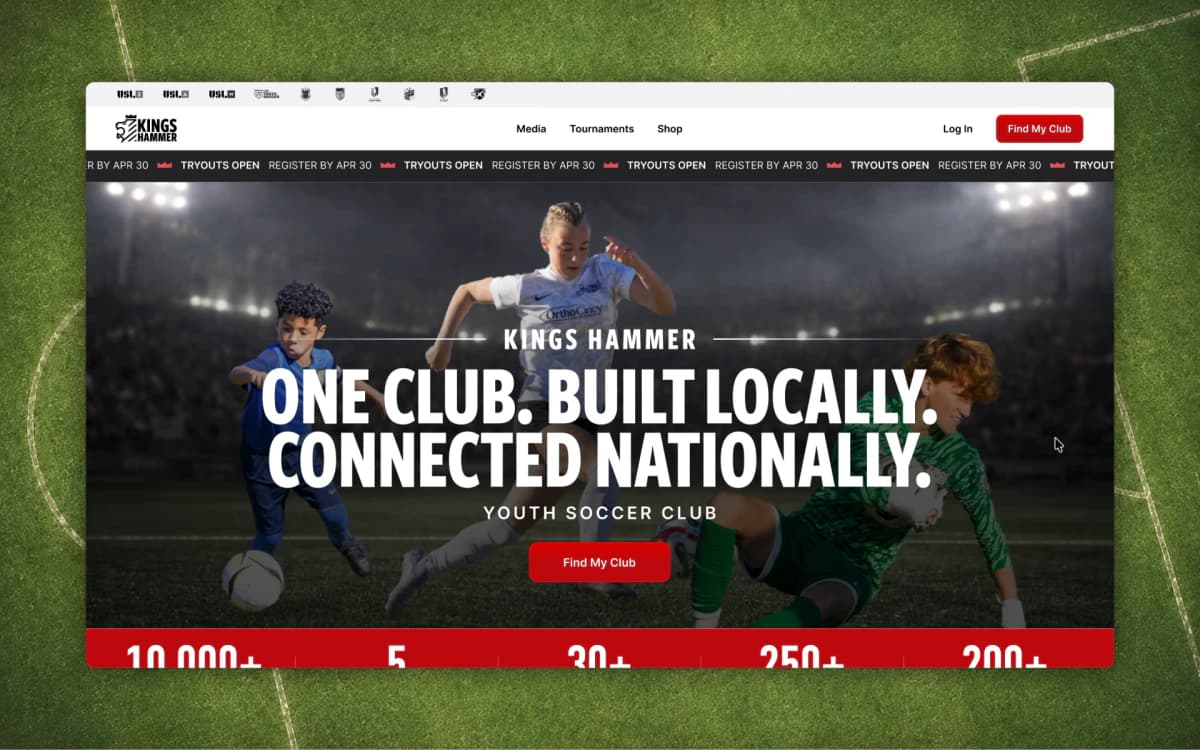
National scale. Local identity.
King’s Hammer serves roughly ten thousand players across five regions and more than a dozen clubs, from Cincinnati to Tampa. Many of those clubs existed before joining King’s Hammer. They came with their own leaders, colors, history, and communities.
That mattered. The new site needed to feel like one organization without making every club feel the same. A rigid corporate template would have been easier to design, but wrong for the people using it.
A path for new families
We interviewed leaders across the organization, and the same problems kept coming up: too many clicks, inconsistent language, and the most important actions buried. The deeper issue was that the site was trying to serve everyone at once.
New parents were choosing a club and program. Existing families were looking for schedules, forms, and registration details. Staff were using it as an archive. Tryouts and camps were competing with everything else.
We made one strategic choice that simplified the rest: The website would guide new families.
Existing families already used the registration platform throughout the season, so we linked those needs out instead of forcing the website to duplicate them. That gave the site a clear path:
Headquarters → region → club → program
Headquarters helps a family find the right club. The club helps them compare programs. The program page gives them the details and the next action. One job per page.
HQ
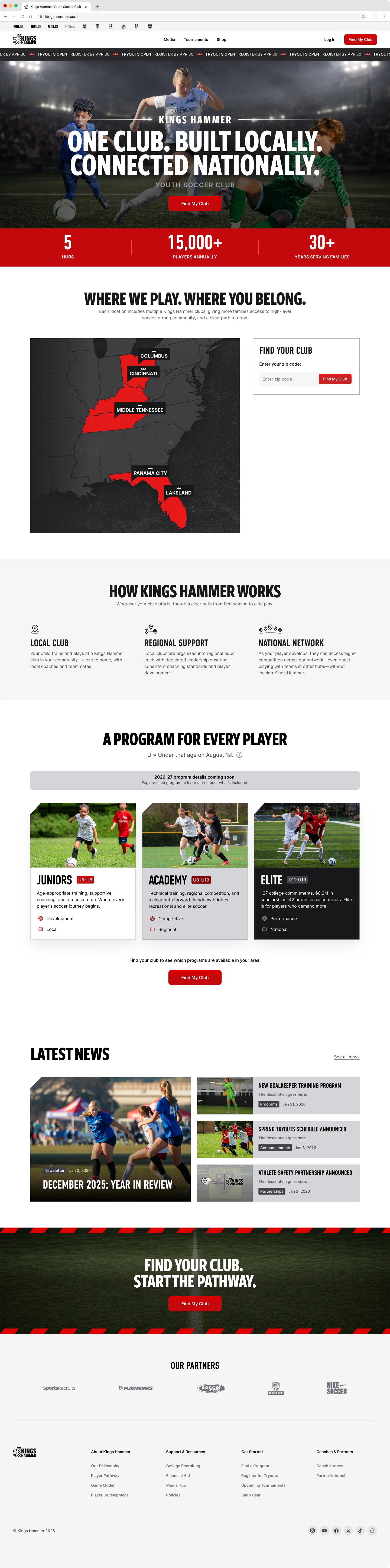
Region

Club

Program

Tryouts
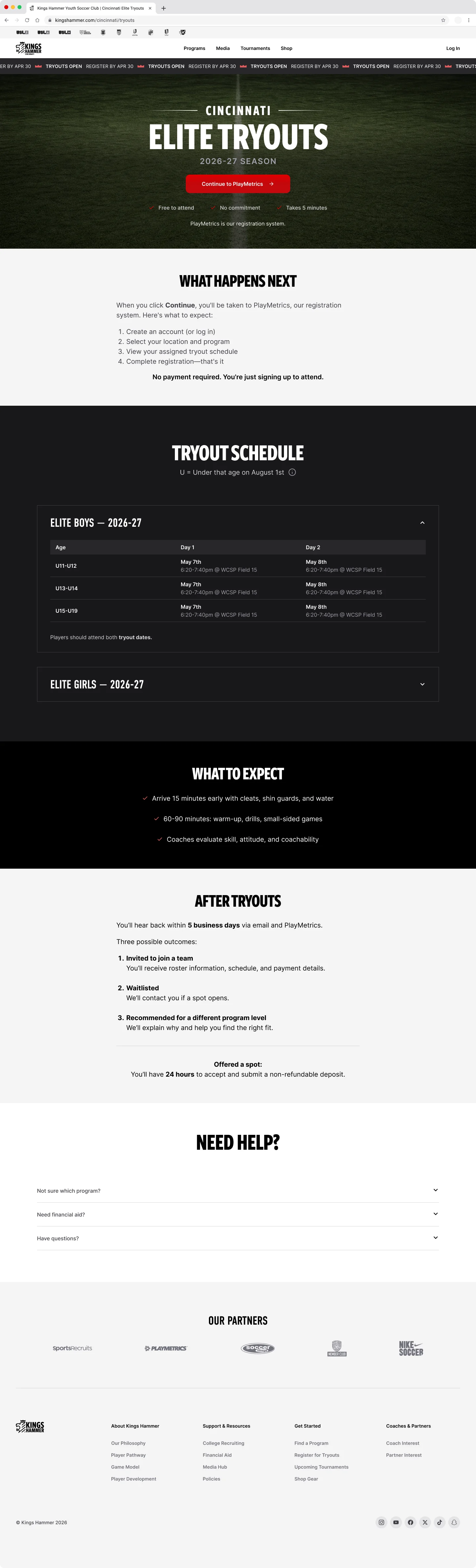
The same programs. Different decisions.
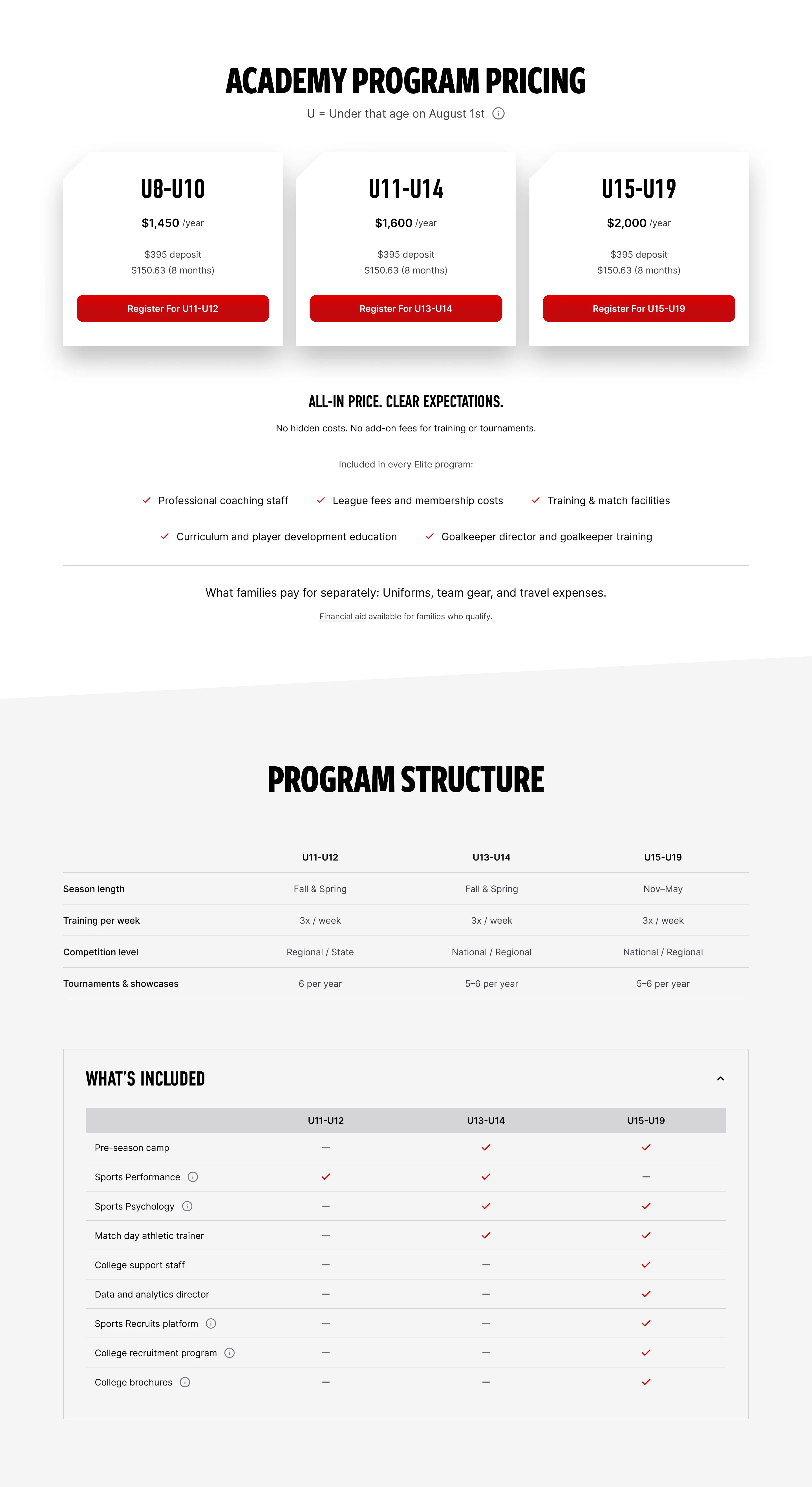
Not every parent is deciding the same thing. Families considering Juniors or Academy usually want the practical details first: age, price, schedule, and location.
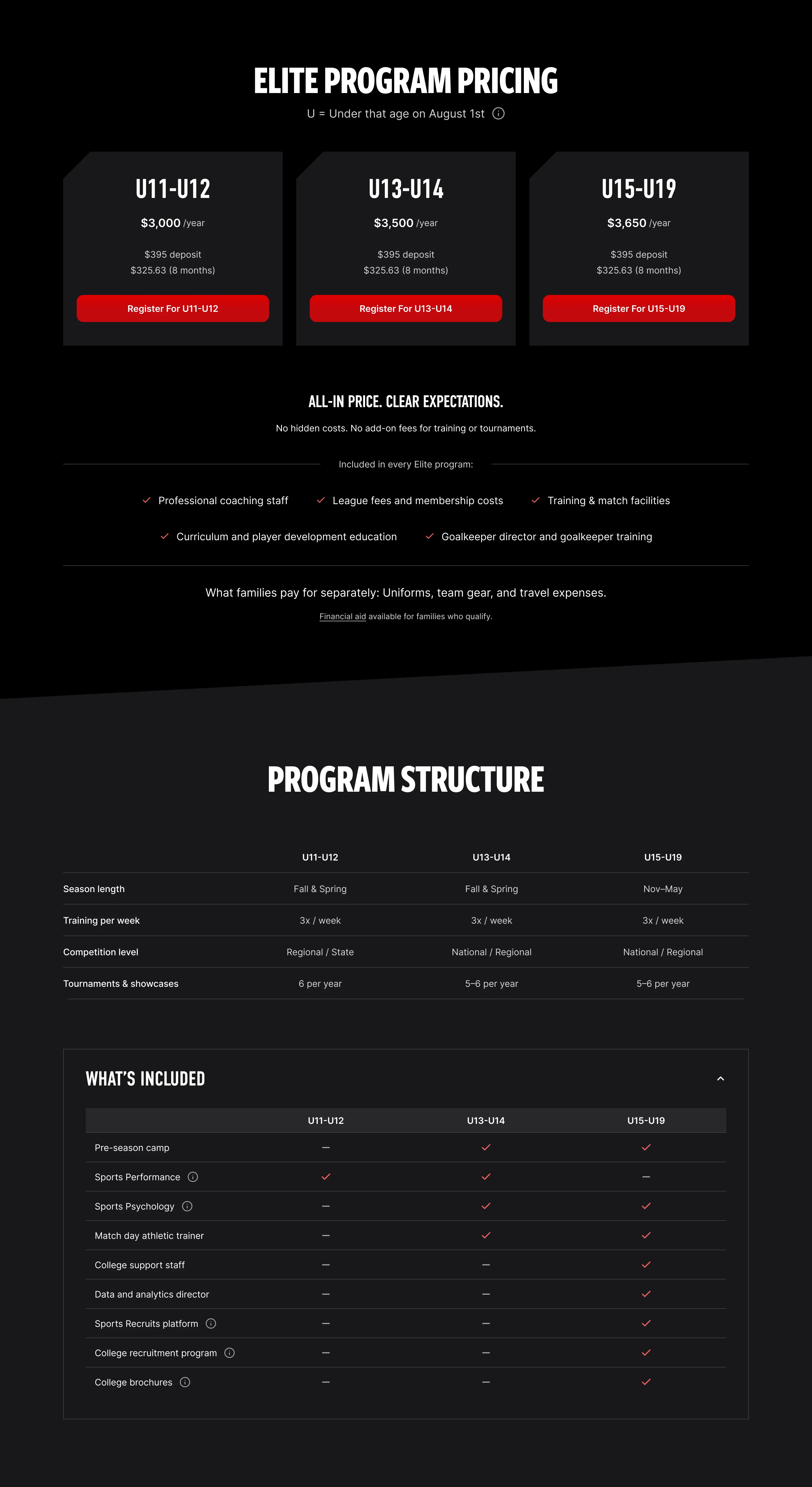
Elite is different. It is a serious competitive commitment, often at the state or national level. Those families need to understand what the program asks of them before the price makes sense. So the information order changes.
Juniors and Academy lead with logistics. Elite leads with the story, expectations, and level of commitment.
The pages share a system, but not an identical hierarchy. And every program shows one all-in price. One number, without fees appearing later.
Academy: logistics first
Elite: story and commitment first
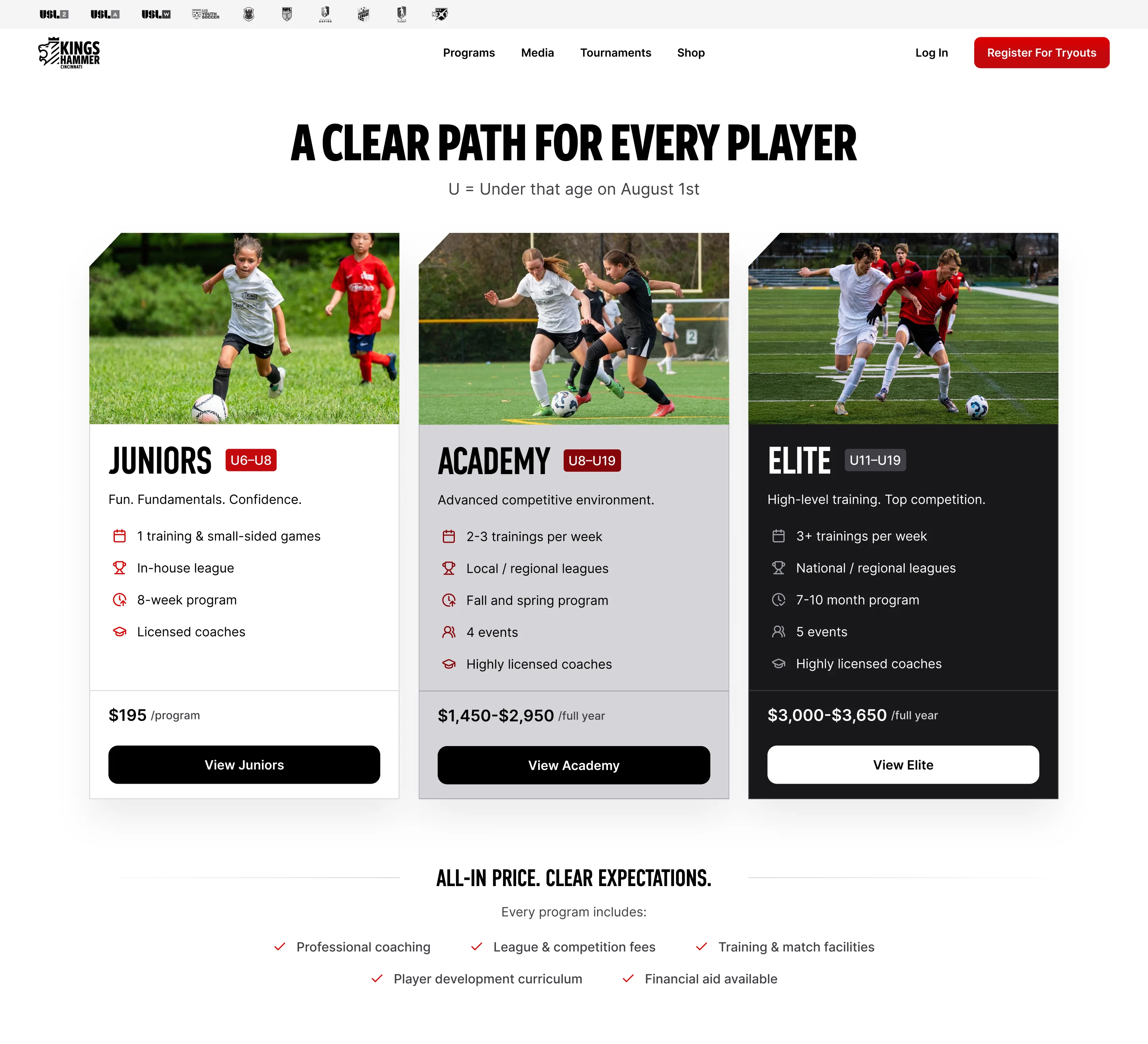
A system that shows the pathway
The visual language helps families understand how the programs relate. Juniors feels young, welcoming, and local. Academy raises the level of skill and commitment. Elite uses the darkest treatment and carries the most competitive energy. The three programs appear together wherever possible, so parents can see the full pathway instead of encountering each program in isolation.
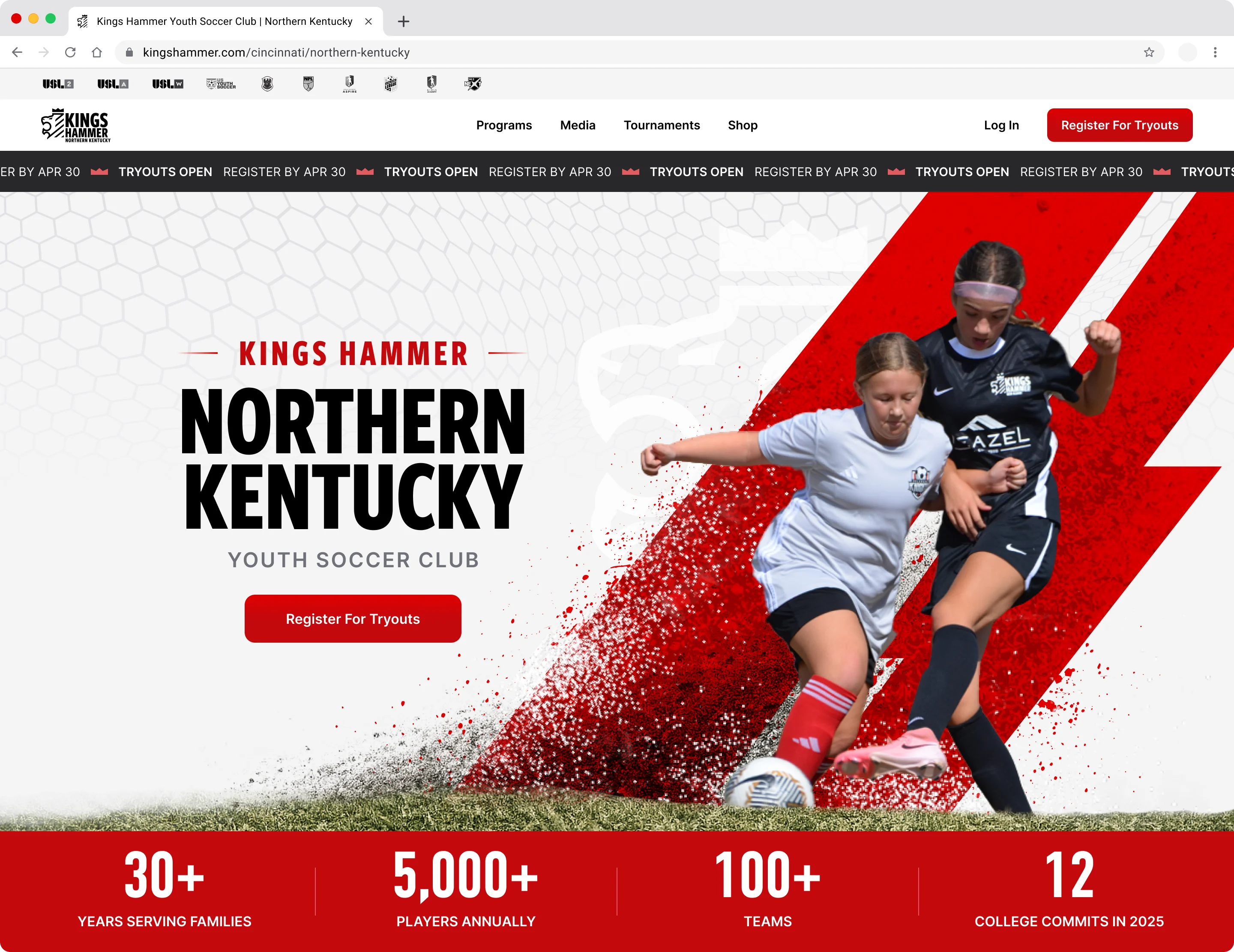
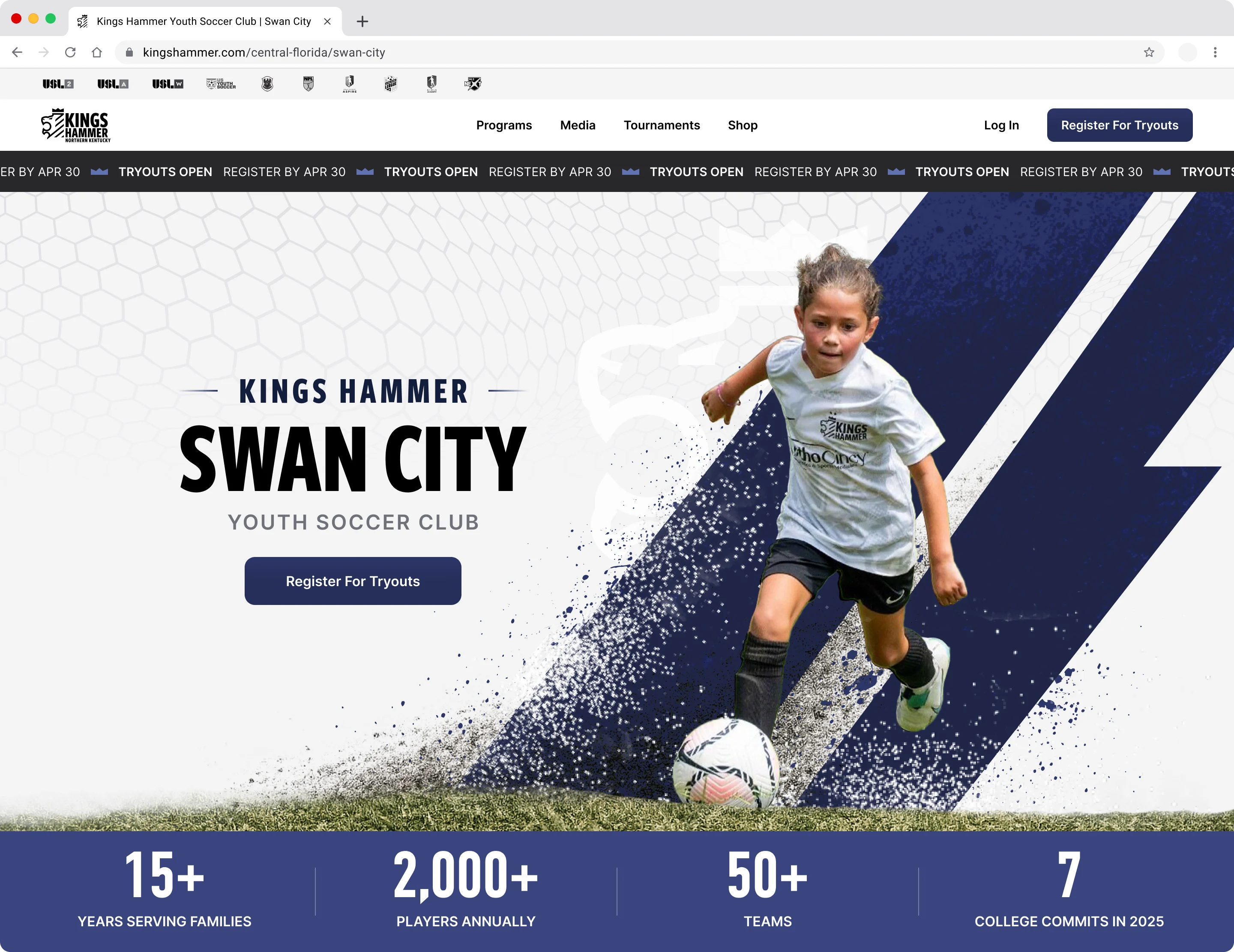
Club identity runs through the same system. Each club gets its own primary color and a set of accessible supporting tones. Northern Kentucky can feel like Northern Kentucky. Swan City can feel like Swan City. The structure stays consistent without flattening either one.
Northern Kentucky
Swan City
Tryouts when they matter
Tryouts are the main call to action, but only during part of the year. When registration is open, the site points families directly to tryouts. During the off-season, that same space shifts to collecting interest. The action changes with the season without changing the architecture around it.
Five days to launch... and one missing route
Five days before launch, the development team caught a real gap. Once someone reached a club page, there was no easy way to explore another club without backing all the way out. The club finder already existed. It just needed a way in from the club pages. I worked through the interaction that day, recorded a walkthrough for the build team, and it shipped before launch.
What shipped
The site launched on March 2, 2026, as planned. It included the national headquarters experience, five regional sites, more than a dozen club sites, program pages, tryouts, and roughly seventy-five pages in total.
Headquarters controls the shared system. Regional teams manage their own content. The same architecture now supports three program levels and a dozen local identities. Post-launch analytics were planned for a later phase, so I do not have conversion numbers to point to yet.
What I can show is the system holding together at scale, the site launching on schedule, and the partnership continuing into new work.
This one was personal
I played for two of the clubs that eventually became part of King’s Hammer. I know what it feels like when a club is your whole week: the practices, drives, tournaments, teammates, and families around it.
The site needed to feel connected to that experience. Not like paperwork.
My role
I was the lead product designer through Ample, working from discovery through launch. I led the information architecture, program and club-page systems, visual direction, interaction design, prototyping, and design QA. I also shaped the club color system, seasonal tryout behavior, and the shared components used across the site.
I worked closely with Kevin on creative direction, Taylor as technical lead, Rudo and Jake in development, and the King’s Hammer team throughout the project. They brought the organizational knowledge and made the decisions. My role was to clarify the options, make those decisions tangible, and carry them through the work.