Pulse
2024-25
AI drafts the update. A person decides what gets published.
Every week, the same thing happened. People did the work in Slack, Loom, pull requests, meetings, and project boards. Then someone had to chase it all down again, turn it into an update, and make it presentable for leadership. By the time the story reached the top, “blocked” had a funny way of becoming “on track.” Pulse was our attempt to make the record more useful and a little more honest.
Start with what already happened
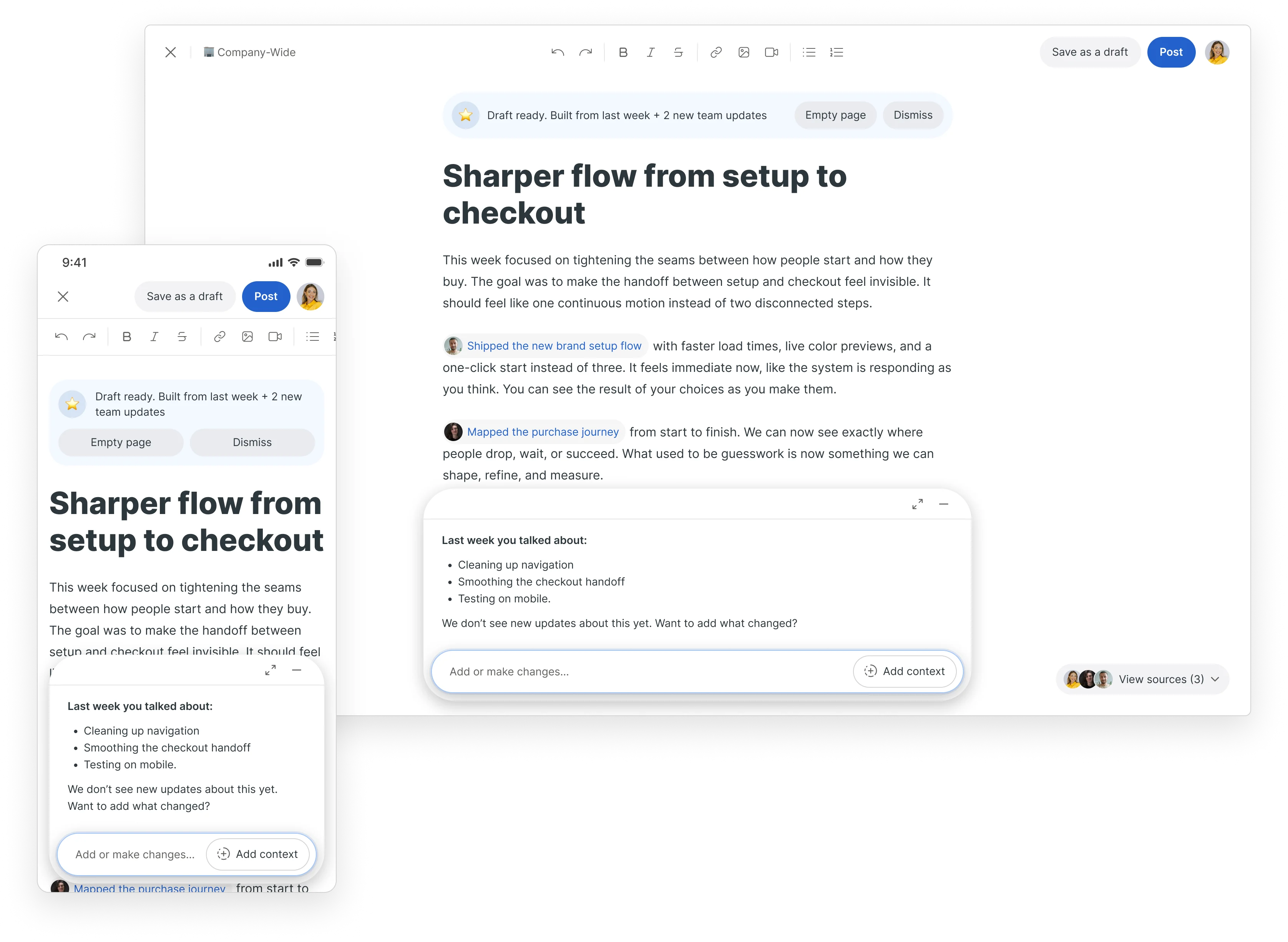
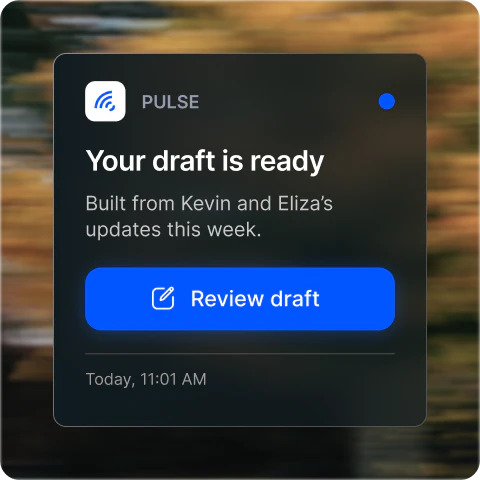
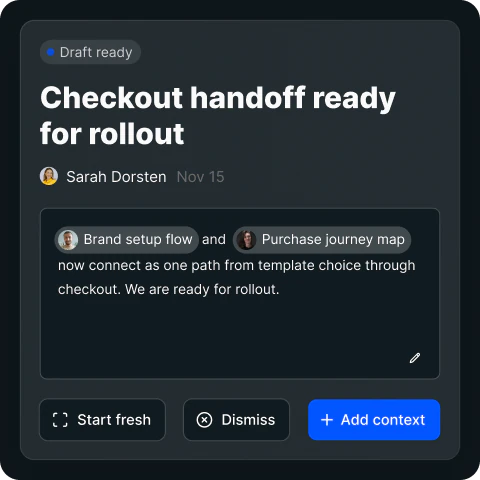
Pulse pulled together the traces a person left behind during the week and turned them into a first draft. Not a finished update. Not the truth according to AI. Just a much better place to start than a blank page. The person could edit it, add the context only they knew, and publish when it felt right.
That became the defining rule of the product: AI drafts. A person edits and publishes.
One team. One page.
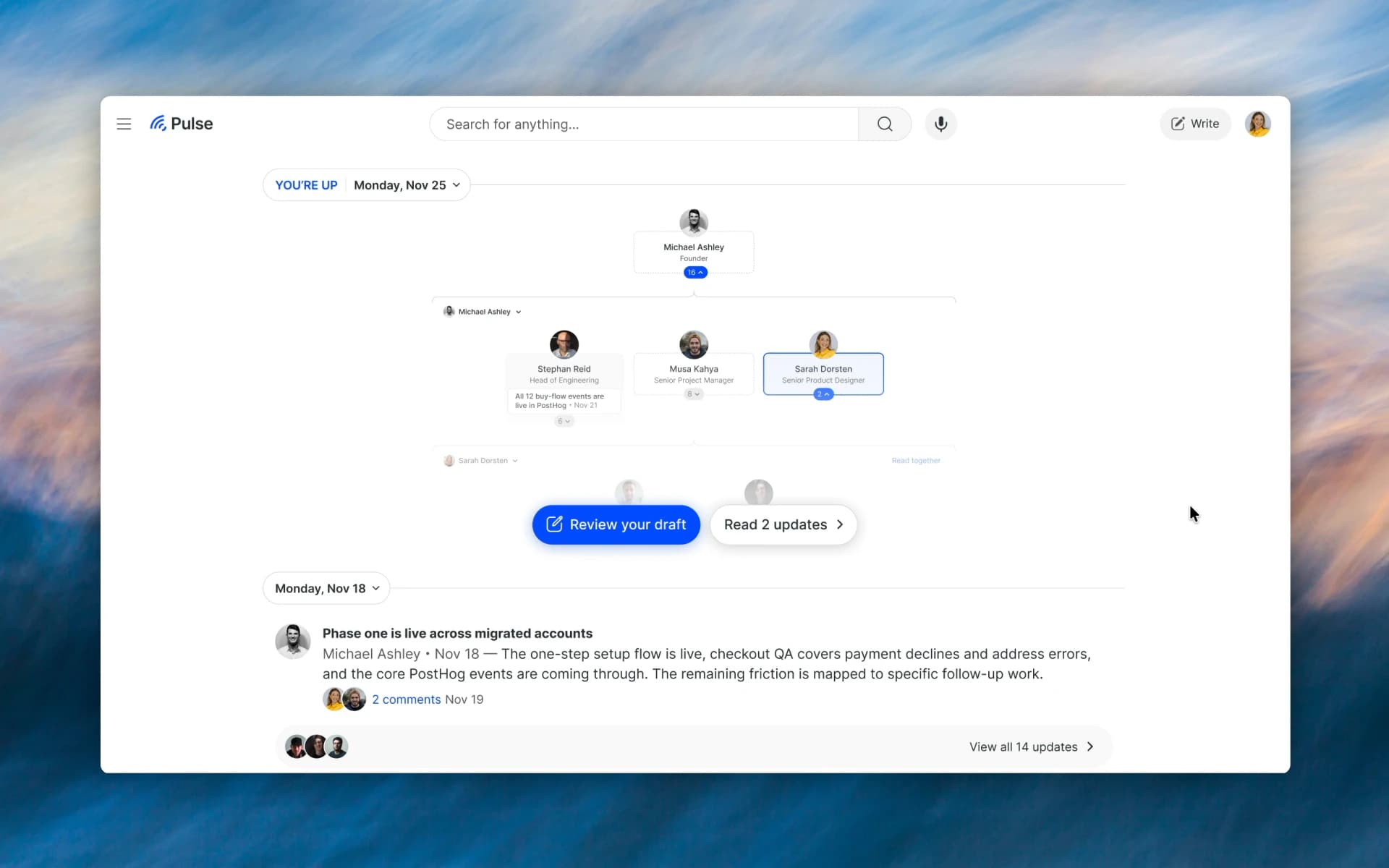
Once people published their updates, Pulse rolled them up through the team. A manager saw the week across the people they led. Leadership saw the week across the organization. Every sentence still connected back to the person and source behind it.
The goal was not to create a prettier status report. It was to make it harder for the story to quietly improve on its way up.
First, we built the wrong thing
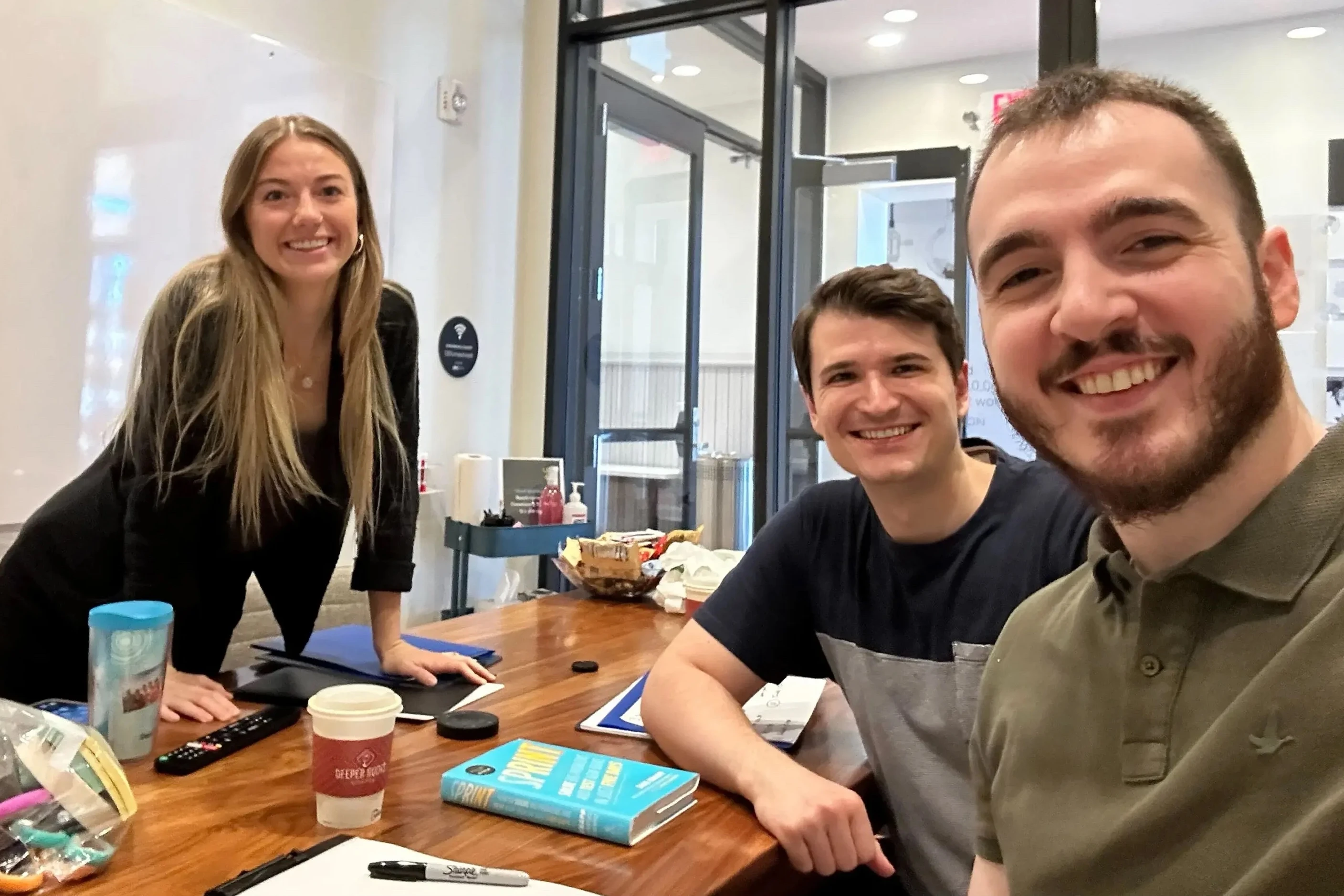
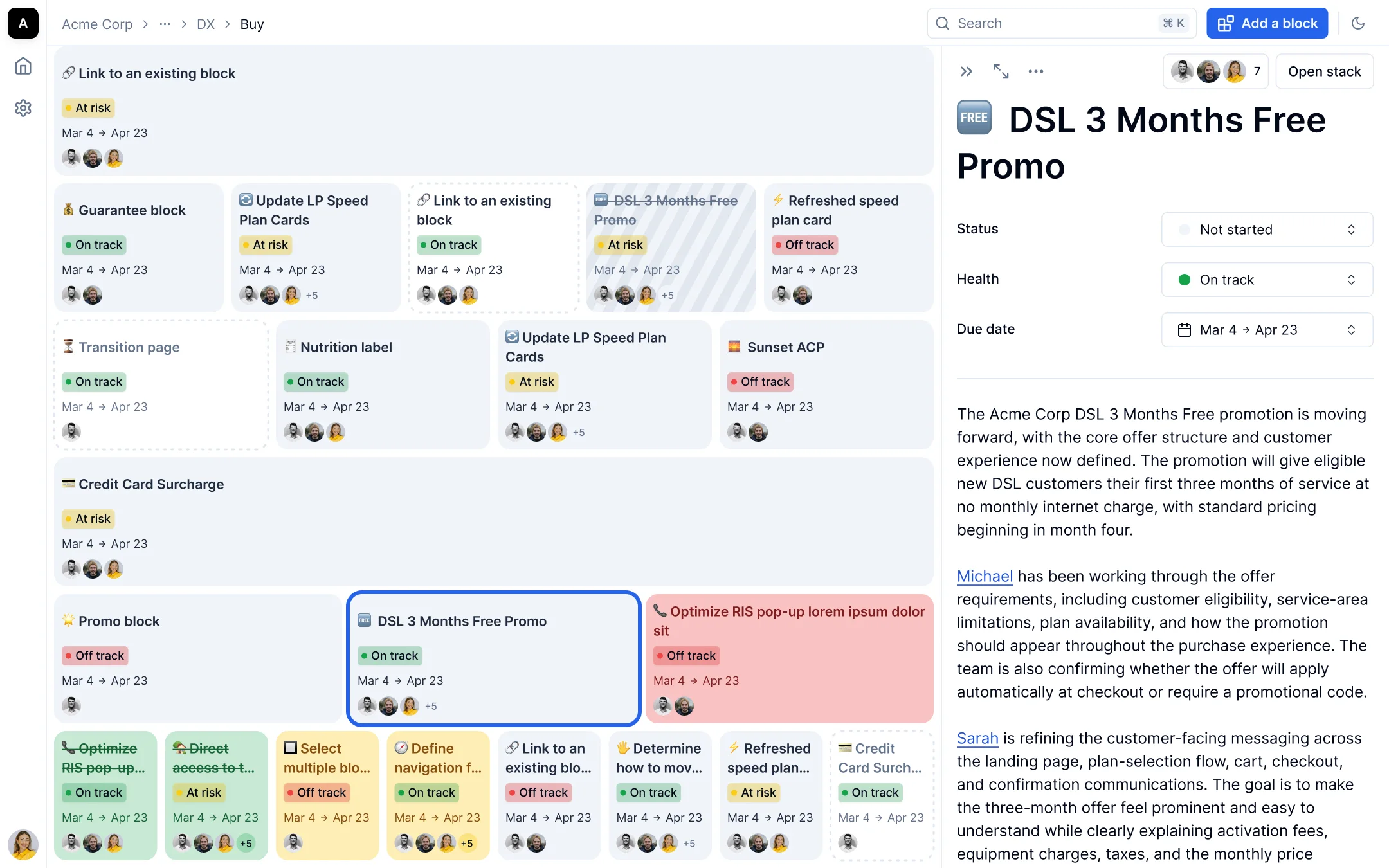
Our original idea was called Stacks. It organized projects into blocks and showed how delays moved through the work. We ran a full design sprint, took it to a finished prototype, and put it in front of people.
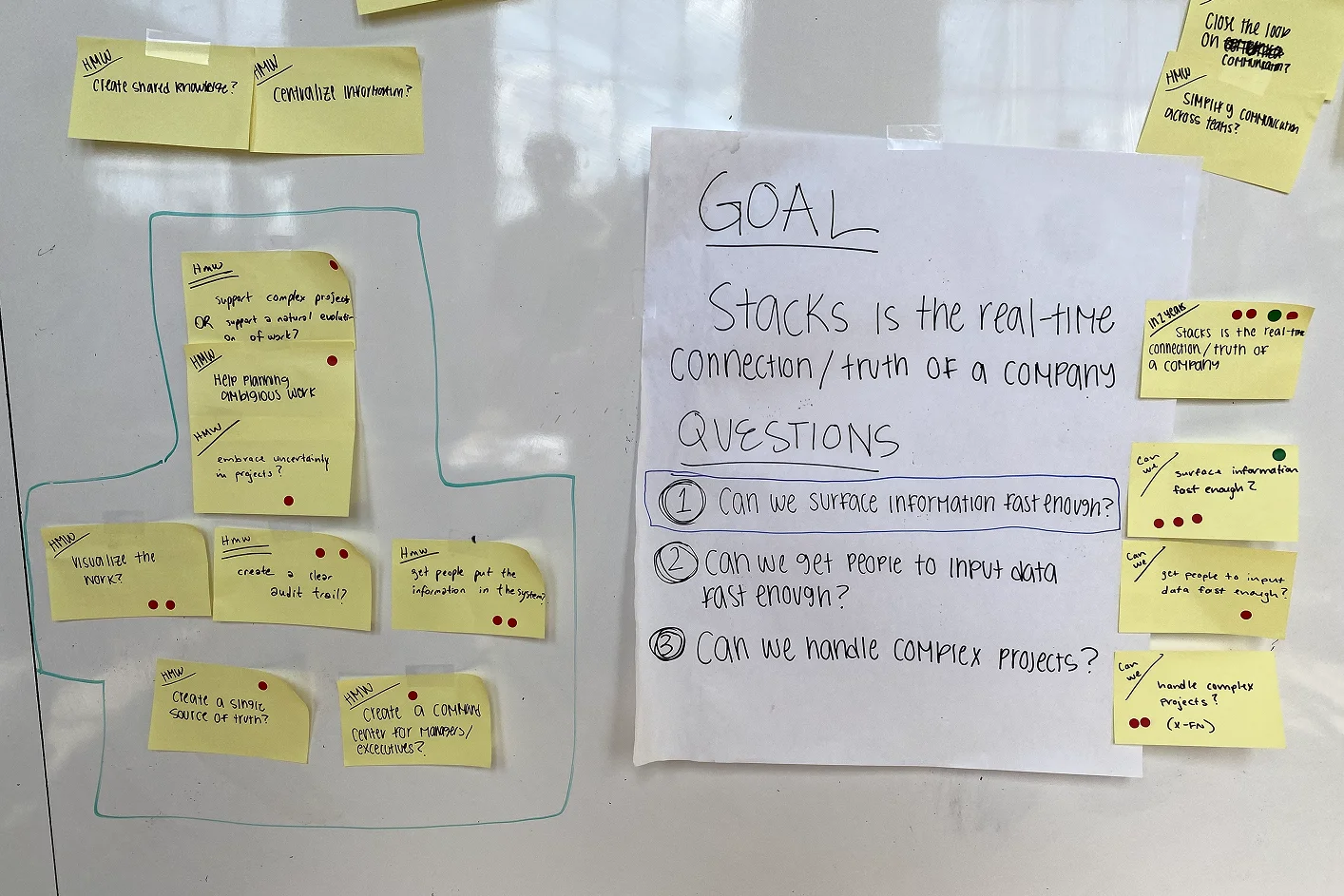
They understood it. They just did not need it. Every team already had its own way of managing work. Jira, Asana, Monday, Trello. Stacks was starting to compete with all of them without being better at the job.
The product did not need to organize the work. It needed to capture what the people doing the work knew. So we scrapped the project view and rebuilt Pulse around weekly updates.
The receipts mattered
A summary is only useful if people trust it.
AI-drafted updates
Human review
Source receipts
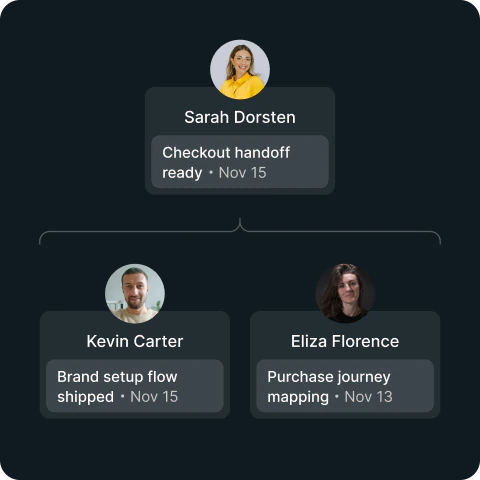
Team rollups
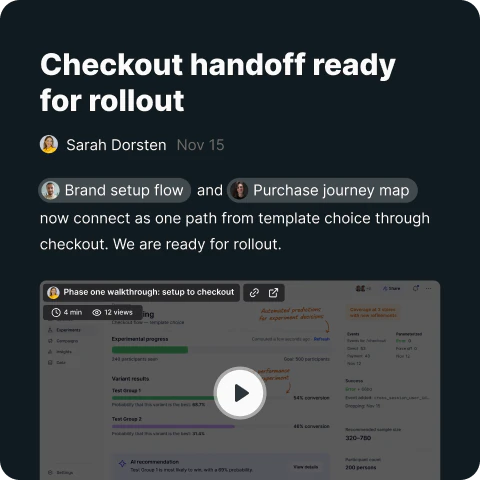
Each update kept the Loom, ticket, dashboard, or conversation behind its claims attached. Anyone reading a rollup could follow a sentence back to where it came from. That made the product feel less like an AI-generated report and more like a record the team could stand behind.
Then the habit broke
We used Pulse with our own team. Some weeks, the drafts were strong. Plenty had happened, the signal was good, and Pulse saved real time. Other weeks, the traces were thin. The draft was thin too. Publishing still felt like another task.
The habit never fully stuck. We showed it to other teams and leaders, and they understood the value right away. The problem was that nobody wanted to convince an entire team to adopt it first.
The value showed up at the top. The work started at the bottom. That was the mismatch. After about six months, we stopped.
What I took with me
Pulse taught me that AI works best here as a draft, not an authority. It also taught me that a collaborative product has to be useful to one person before it asks for a whole team.
We built Pulse for the organization first. It needed to earn its way there.
My role
I was the sole product designer on a three-person team, working closely with my technical partners, Michael Ashley and Musa Kahya, from early research through implementation. I led the interviews, design sprint, product pivot, core workflows, prototyping, and ongoing design work alongside them.